
Chalisa
Saraswati Chalisa: learning, speech and practice
Connect the themes of Saraswati praise with study, music and thoughtful speech.
Key ideas from this article
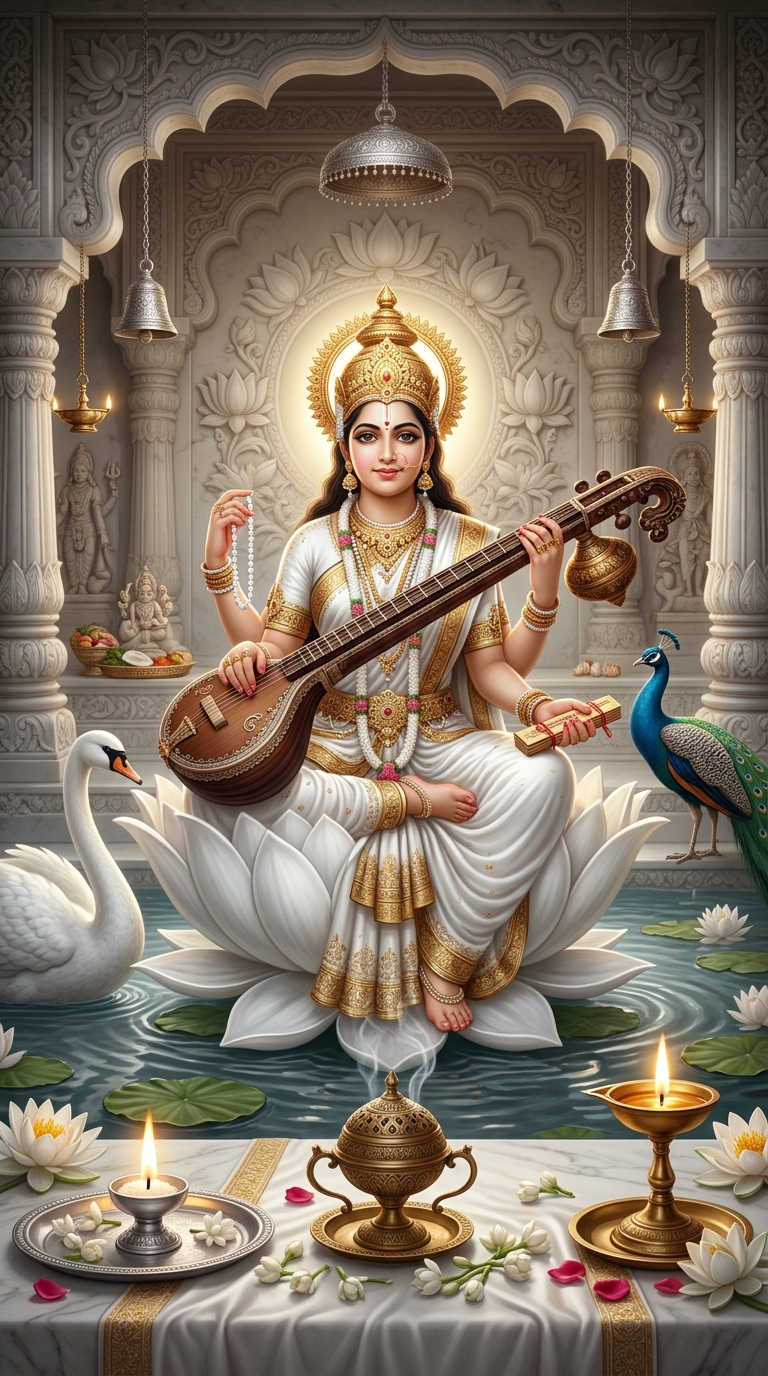
Connect the themes of Saraswati praise with study, music and thoughtful speech.
An address to learning
Knowledge, language, music and artistic practice are central themes of Saraswati worship. Mark words about understanding and speech in your edition. Looking up an unfamiliar term is itself an act of study. This introduction is not a complete traditional Chalisa.
Pronunciation as learning
Choose a few difficult words and repeat them slowly. Transliteration can help, but compare vowel lengths with the script and a knowledgeable reader. When singing, preserve clear words rather than changing their sense to fit a tune.
Connecting reading with study
After the devotional reading, choose a concrete learning goal: one problem, one understood page or a revision session. Keep materials accessible. Examination results depend on preparation, wellbeing and other circumstances rather than a recitation alone.
Care in speech
Knowledge need not be used to belittle another person. Admit when an answer is uncertain and return with a checked source. Help children with pronunciation patiently and leave room for questions instead of attaching fear to a mistake.
Read next

Hanuman Chalisa: introduction and practice
An introduction to a devotional work dedicated to Hanuman.
View details →
Ganesh Chalisa: a guide to meaning and study
Read Ganesh praise through the themes of beginnings, discernment and humility.
View details →
Shiv Chalisa: names, symbols and study
Understand names and narrative references in Shiva praise without losing their context.
View details →
Durga Chalisa: strength and compassion
Separate names, narrative imagery and prayer when studying praise of the Goddess.
View details →