
Chalisa
Durga Chalisa: strength and compassion
Separate names, narrative imagery and prayer when studying praise of the Goddess.
Key ideas from this article
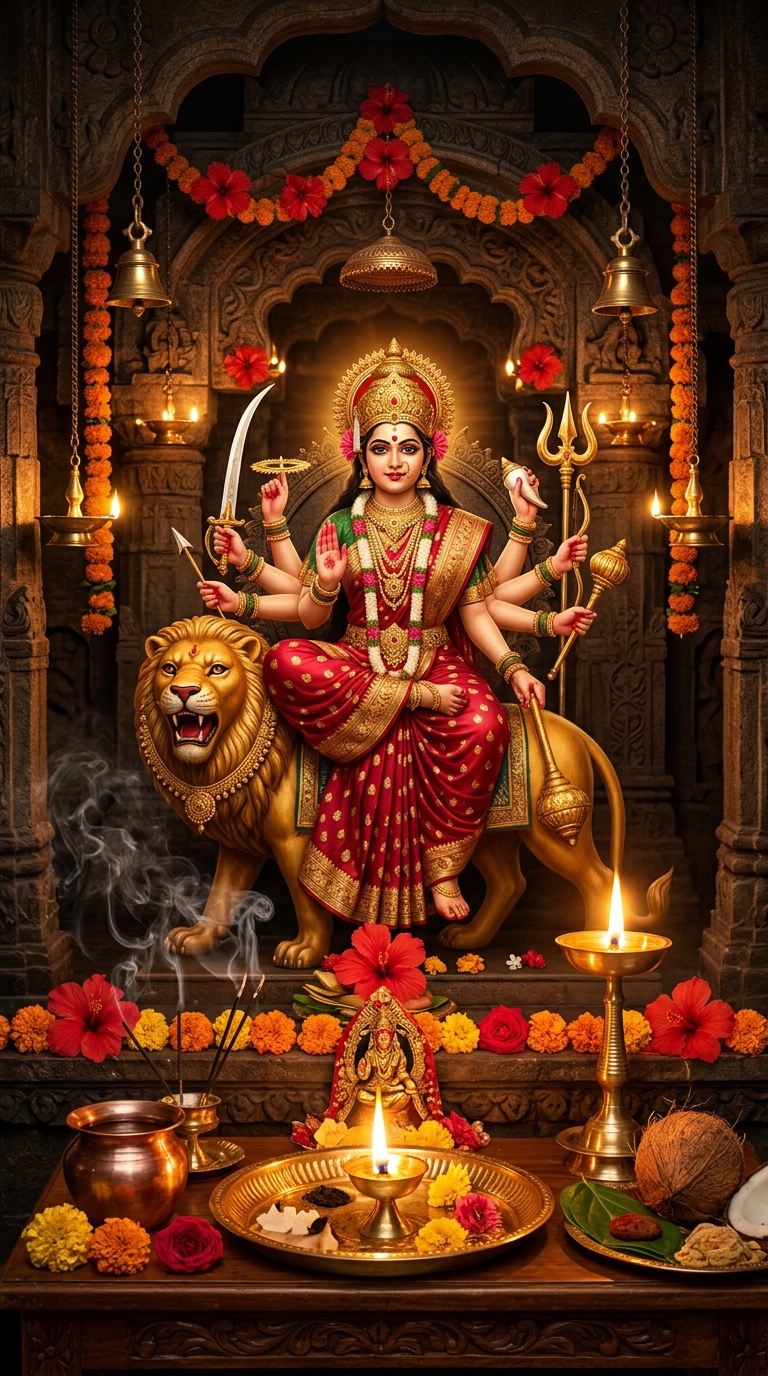
Separate names, narrative imagery and prayer when studying praise of the Goddess.
Many forms of address
Durga worship brings together power, motherhood and protection. Read each name in the setting of your edition rather than assigning every name the same story or ritual. This page is an introduction to study, not the traditional recitation.
The language of courage
Battles in Goddess narratives express religious ideas about courage, order and struggle. Their figures are not labels to place on present-day people. Ask which quality a narrative highlights and how the surrounding passage develops it.
Reading together during Navratri
Use one readable edition when studying as a group. Decide who will read and who will explain unfamiliar words. A comfortable audible voice is sufficient. Children and new readers can participate by listening to the meaning rather than keeping pace with an experienced reciter.
Strength with sensitivity
Courage may mean expressing a need respectfully or recognising when support is needed. Sharing a household responsibility or making time for a tired relative gives compassion a practical form. Build a comfortable routine without making a promised result its measure of success.
Read next

Hanuman Chalisa: introduction and practice
An introduction to a devotional work dedicated to Hanuman.
View details →
Ganesh Chalisa: a guide to meaning and study
Read Ganesh praise through the themes of beginnings, discernment and humility.
View details →
Shiv Chalisa: names, symbols and study
Understand names and narrative references in Shiva praise without losing their context.
View details →
Lakshmi Chalisa: prosperity and responsible use
Explore gratitude, household life and the use of resources in Lakshmi devotion.
View details →