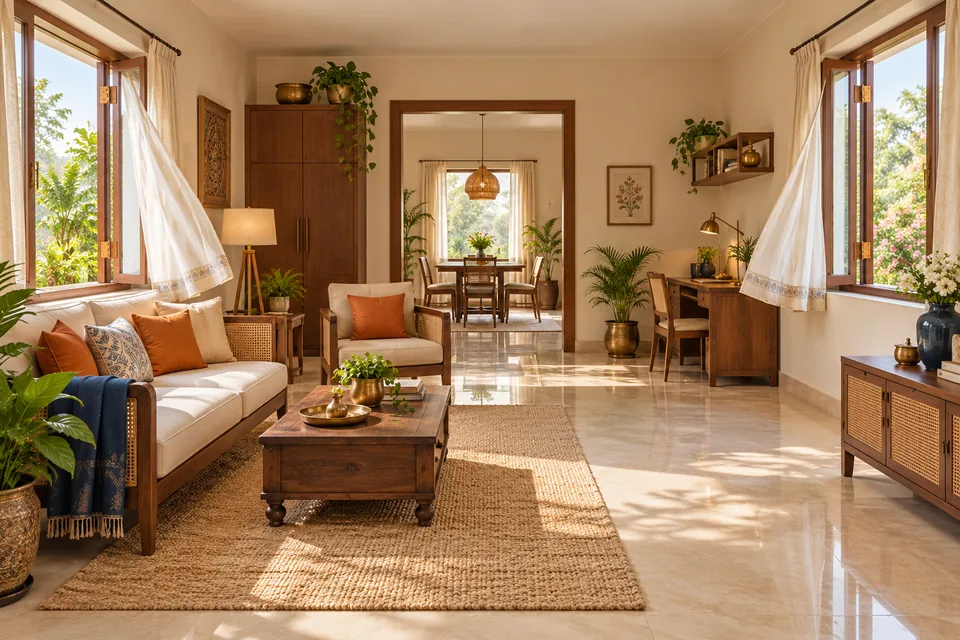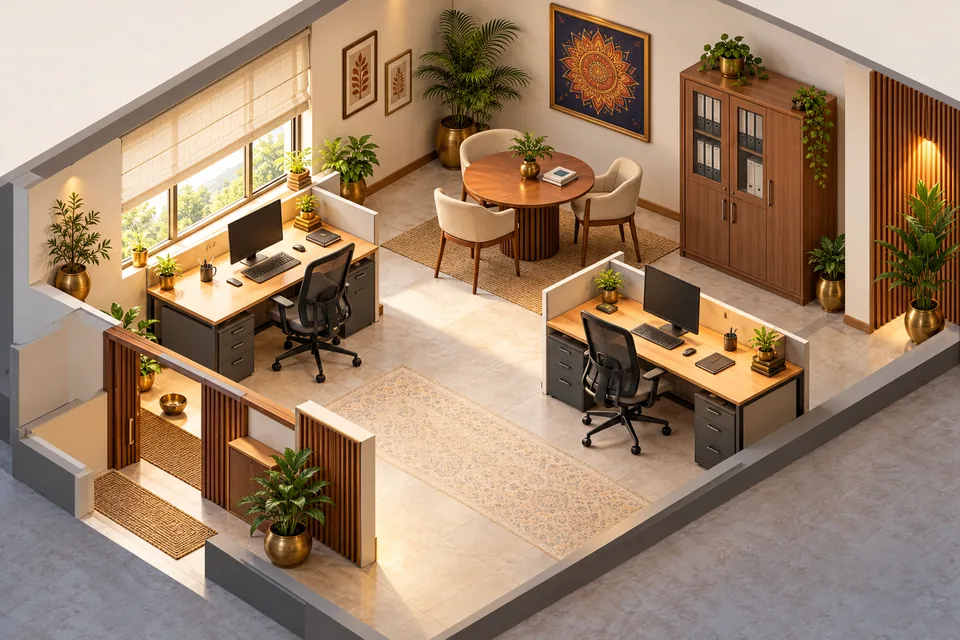
This guide considers study room vastu and learning space together with everyday use. Pictures and diagrams explain possible arrangements; they are not measured construction drawings for your room. Observe the existing space before choosing manageable changes for your needs and budget.
Tradition and orientation
Some traditions favour east or north desks. This is not a guarantee of learning outcomes.
Desk use
Choose a surface for the books, notebook and screen actually used together. Consider the reader’s height and hand position. Keep daily items close and less used items in separate storage when space is limited.
Focus and lighting
Check whether the reader’s hand blocks useful light on the page. Adjust desk angle or shade when window glare is uncomfortable. Choose a work time and location while considering calls and household movement.
Books and cables
Group books by subject or use. Check tall shelves for stability and keep heavy books easy to handle. Route equipment cables away from the chair wheels and feet.
Routine and changes
Use a small end-of-day habit to clear the desk. Try a new arrangement for a few days before making permanent changes. Orientation does not guarantee exam marks or employment.
A practical checklist
- Doors and everyday routes remain usable.
- Light and usable space fit the intended activity.
- Heavy furniture, fittings and cables have been reviewed.
- Small changes have been tried with feedback from the occupants.
- Major structural or service changes have professional review.
Start small and review
Mark the problem area on a photo or simple sketch. Try one manageable change at a time and review everyday use for a few days. Plan further work when access, cleaning or tasks become easier. Avoid expensive demolition based on fear or promised outcomes.