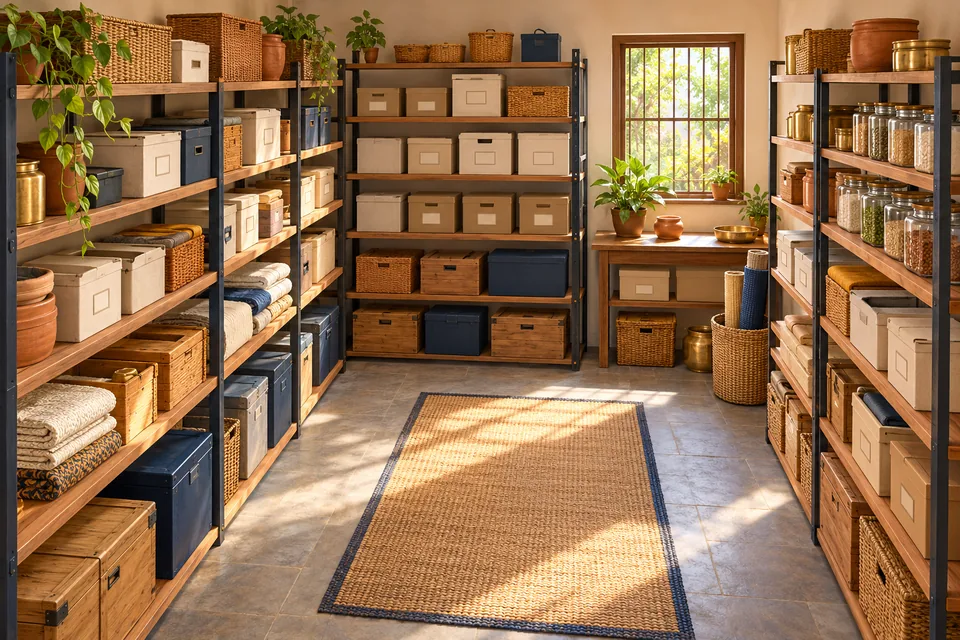
This guide considers storage room vastu and organised belongings together with everyday use. Pictures and diagrams explain possible arrangements; they are not measured construction drawings for your room. Observe the existing space before choosing manageable changes for your needs and budget.
Read Vastu in context
A direction or decorative choice does not guarantee benefits. Buildings, access, activities and people have different needs. Consider available space and actual building conditions alongside any traditional preference.
Inventory
List groups of belongings before emptying the room. Distinguish daily, monthly and rarely used items. Let the owner decide what happens to damaged or unnecessary possessions.
Shelves and heavy items
Check stability and secure fixing where needed. Keep heavy boxes low and lighter items within convenient reach. Avoid tall unstable stacks or items leaning into the route.
Access and identification
Leave access through the room and to essential fittings. Add useful labels in your own language. Change the grouping if finding one item requires unloading a whole shelf.
Moisture and upkeep
Address the cause of water from walls, roof or floor before restacking belongings. Do not cover ventilation openings. Understand separate storage needs for electrical items, chemicals and food.
A practical checklist
- Doors and everyday routes remain usable.
- Light and usable space fit the intended activity.
- Heavy furniture, fittings and cables have been reviewed.
- Small changes have been tried with feedback from the occupants.
- Major structural or service changes have professional review.
Start small and review
Mark the problem area on a photo or simple sketch. Try one manageable change at a time and review everyday use for a few days. Plan further work when access, cleaning or tasks become easier. Avoid expensive demolition based on fear or promised outcomes.