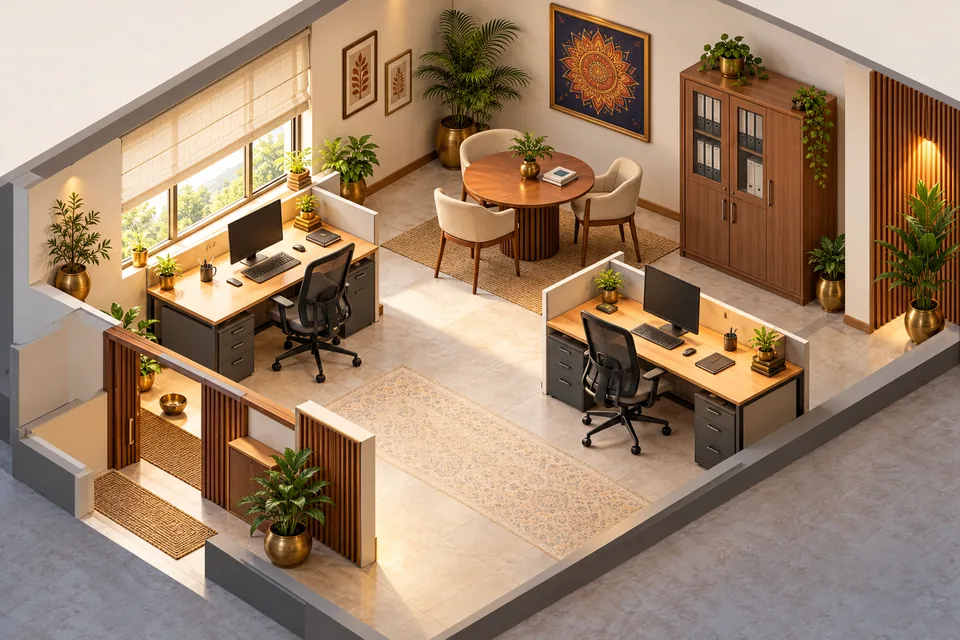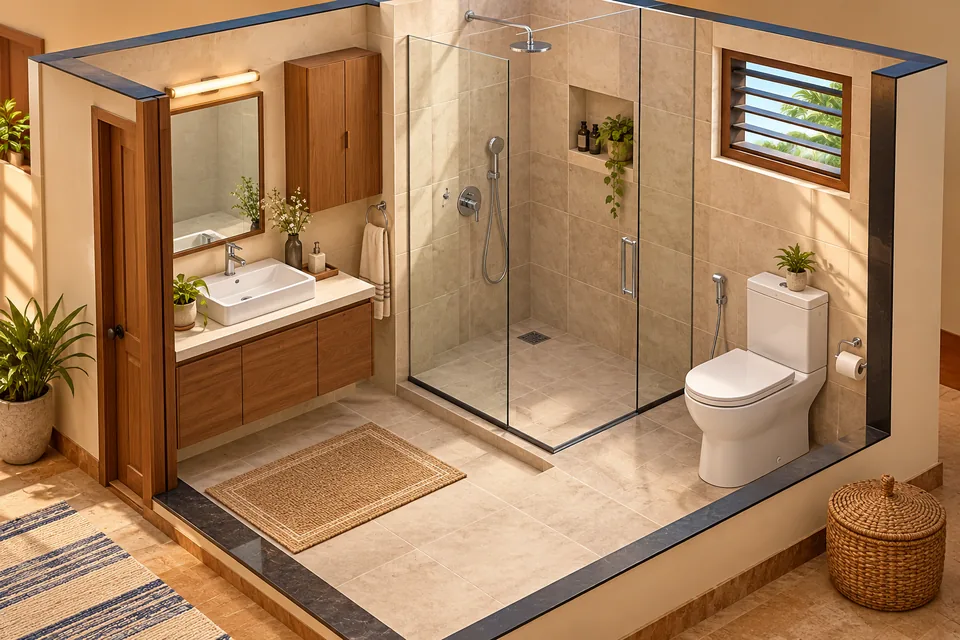
This guide considers bathroom vastu and wet/dry zones together with everyday use. Pictures and diagrams explain possible arrangements; they are not measured construction drawings for your room. Observe the existing space before choosing manageable changes for your needs and budget.
Read Vastu in context
A direction or decorative choice does not guarantee benefits. Buildings, access, activities and people have different needs. Consider available space and actual building conditions alongside any traditional preference.
Use zones
Observe space and door movement around the shower, basin and toilet. When water gathers near entry, review the actual drainage and enclosure. The illustration does not specify construction dimensions.
Floor and access
Consider how the floor is used when wet. Review loose mats and buckets in the route. Get suitable assistance when a resident needs support fittings or easier access.
Air and leaks
Keep ventilation openings clear of storage. Attend to moisture, leaks and faulty fittings through maintenance. Do not dismiss odour or mould simply as a Vastu issue.
Storage and changes
Keep everyday items in usable storage. Have qualified people assess electrical equipment and socket locations. Understand the building before changing plumbing to follow a directional preference.
A practical checklist
- Doors and everyday routes remain usable.
- Light and usable space fit the intended activity.
- Heavy furniture, fittings and cables have been reviewed.
- Small changes have been tried with feedback from the occupants.
- Major structural or service changes have professional review.
Start small and review
Mark the problem area on a photo or simple sketch. Try one manageable change at a time and review everyday use for a few days. Plan further work when access, cleaning or tasks become easier. Avoid expensive demolition based on fear or promised outcomes.